
Forex IB System: How Brokers Automate Partners, Rebates and Commissions

Multi-Level Forex IB System: How to Build and Scale Partner Networks
Introducing Brokers remain one of the most important distribution channels for many Forex and CFD brokerages. A successful IB can introduce hundreds or thousands of traders, while larger partner networks may expand across countries, languages and multiple levels of sub-partners.
As those networks grow, however, managing them becomes significantly more complex. A simple relationship between one broker, one IB and a group of referred clients can evolve into a hierarchy containing master partners, regional partners, sub-IBs and traders, each operating under different commercial agreements.
This is where a multi-level Forex IB system becomes important. Rather than treating every partner relationship independently, the technology creates a structured network in which referrals, trading activity and commissions can be attributed automatically throughout the hierarchy.
For brokerages looking to scale partner acquisition, understanding how these systems work is increasingly important.
What Is a Multi-Level Forex IB System?
A multi-level IB system is technology designed to manage hierarchical Introducing Broker networks. Instead of allowing an IB to refer only traders, the brokerage can allow partners to introduce additional IBs beneath them.
Imagine that Partner A introduces Partner B. Partner B subsequently introduces Partner C, and Partner C refers a trader. The resulting relationship is no longer simply between the brokerage and the trader. The system needs to understand that the trader belongs directly to Partner C while Partner C belongs to Partner B and Partner B belongs to Partner A.
This creates a structured downline through which commissions can be distributed according to the brokerage’s commercial agreement.
Nullpoint’s Forex IB & Partners Management System is designed around this model. It supports tier-based partner hierarchies and automatically establishes the relationship between referring partners, sub-IBs and their traders. The standard deployment includes five tiers, while additional tiers can be requested when required.
The advantage is not simply the ability to create more levels. The important part is maintaining the correct attribution as the network grows.
Automating Referral Attribution Across the IB Network
A scalable partner network starts with referral attribution.
When an IB shares a referral link and a trader registers through it, the system can automatically associate that trader with the referring partner. If that trader later becomes an IB, the new partner can be positioned beneath the original referrer. Future traders introduced by the new IB then remain connected to the appropriate branch of the network.
This automation becomes increasingly valuable as networks grow. Manually maintaining the relationship between hundreds of partners may be manageable. Maintaining accurate attribution across thousands of traders and several levels of partners is considerably more difficult.
Within Nullpoint’s system, referral-link registration automatically maps the trader to the referring IB and the relevant campaign, while associated trading accounts inherit the campaign’s symbol-cost and tier rules.
The brokerage therefore does not need to reconstruct the hierarchy every time trading activity occurs. The relationship already exists within the system and can be used when calculating commissions.
When the IB system is connected with the wider Forex CRM environment, partner attribution can also form part of the broader client lifecycle rather than operating as an isolated affiliate database.
How Multi-Level IB Commission Distribution Works
Creating the hierarchy is only one part of the problem. The brokerage also needs to determine how the available commission should be distributed through it.
Consider a five-level structure in which a trader is directly associated with a Tier 1 IB, who belongs to a Tier 2 partner, who in turn belongs to higher levels of the network. The brokerage may decide that the direct IB should receive the largest proportion because that partner owns the immediate client relationship, while smaller percentages flow upward to the partners responsible for developing the wider network.
Nullpoint’s system allows the brokerage to define the percentage of the generated commission allocated to each tier. Under the standard distribution model, the percentages across the hierarchy must equal 100%, ensuring that the available commission pool is fully distributed according to the configured structure.
This provides considerably more flexibility than maintaining a single rebate rate for every partner.
It also allows brokerages to design partner structures around their commercial strategy. A regional master IB, for example, can be incentivised not only to introduce traders directly but also to recruit and develop productive sub-IBs.
Campaign-Based IB Commission Management
A sophisticated Forex IB system needs more than hierarchy management. Different partners frequently operate under different commercial arrangements.
One IB might receive a fixed amount for every lot traded. Another might have a revenue-sharing agreement. A strategic partner might negotiate a hybrid structure combining several compensation methods.
Nullpoint handles these commercial arrangements through campaigns. Campaigns determine how commission is generated and can be assigned to one or multiple partners, while an individual partner can simultaneously have more than one campaign.
This campaign-based architecture allows the brokerage to separate the structure of the network from the commercial model applied to it.
The current system supports Fixed per Lot, Pip Value-Based, Revenue Share and Hybrid commission models, with CPA available as an additional incentive mechanism. In addition, Nullpoint supports Spread Share and USD per Million campaign structures, giving brokers further options for building partner agreements around their pricing and volume models.
That flexibility matters because there is no universal IB compensation structure suitable for every brokerage, asset class or partner.
Fixed per Lot Commission
The Fixed model is one of the most straightforward approaches to partner remuneration.
The brokerage defines a monetary amount per traded lot, allowing the partner’s commission to increase directly with the trading volume generated by referred clients.
For example, if a campaign pays $8 per standard lot and an eligible client trades three lots, the total commission generated would be $24 before applying the relevant tier distribution.
The system normalizes MT4 and MT5 volume according to the platform before calculating the commission, allowing the commercial model to remain consistent despite differences in how trading volume is represented.
This model is attractive when the brokerage wants a predictable relationship between trading volume and partner cost.
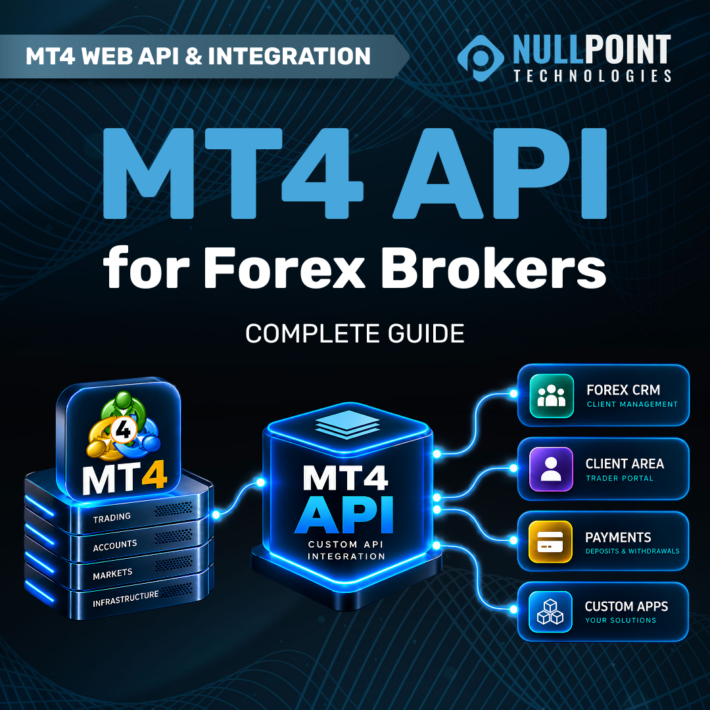
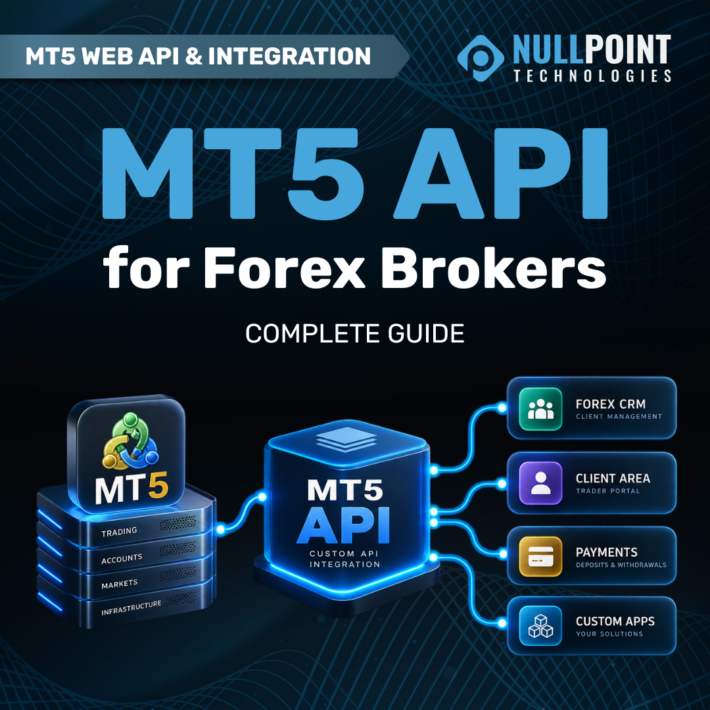
For brokerages operating MetaTrader environments, connectivity between trading infrastructure and external brokerage systems can also be extended through technologies such as an MT4 API or MT5 API.
Pip Value-Based Commission
A pip-based model introduces another level of flexibility. Instead of applying a simple fixed dollar amount per lot, the commission can take the characteristics of the traded instrument into account.
This becomes useful when a brokerage offers a diverse product range where tick sizes, contract sizes or quote currencies vary substantially.
Nullpoint’s pip-based model uses trading volume, contract size, the symbol multiplier and the applicable USD conversion rate when determining the resulting commission.
The brokerage can therefore create commission arrangements that adapt more precisely to the underlying instrument rather than treating every security identically.
Spread Share
Another approach is to compensate the partner based on a share of the spread generated by referred trading activity.
This can be particularly useful when a brokerage wants IB compensation to remain connected to the actual commercial value generated through its pricing model rather than using a fixed amount per lot.
Instead of defining only a flat rebate, the commercial agreement can specify the portion of the applicable spread that should be attributed to the partner network. The resulting amount can then follow the configured partner hierarchy and tier-distribution logic.
For brokers, Spread Share provides another way to align partner compensation with the economics of the underlying trading activity.
USD per Million
For institutional-style or volume-oriented partner arrangements, commissions can also be expressed as a USD amount per million of traded notional volume.
Rather than saying that an IB receives a particular amount per lot, the agreement might specify a monetary value for every $1 million of qualifying volume generated by referred traders.
This structure can be particularly useful where commercial agreements are already negotiated in notional-volume terms or where the brokerage wants a consistent volume-based framework across different instruments and trading conditions.
Together with Fixed per Lot, Pip Value, Revenue Share and Spread Share, the USD per Million model gives the brokerage several ways to structure partner compensation according to how the underlying business generates revenue.
Revenue Share
Revenue Share operates differently from traditional volume rebates.
In a B-Book environment, the brokerage may choose to share part of the net trading result generated by referred clients with the IB. Under Nullpoint’s implementation, separate percentages can be configured for client losses and client profits, while swaps and MT4/MT5 commissions can optionally be incorporated into the calculation.
For example, if the configured share on client losses is 60% and referred clients generate $2,000 in eligible losses, the partner would generate $1,200 in commission. If the agreement also includes a percentage of client profits, profitable client activity can reduce the accumulated Revenue Share amount according to the configured percentage.
This creates a fundamentally different commercial relationship from a straightforward volume rebate and demonstrates why an IB platform needs to support several campaign types rather than imposing a single commission methodology.
Hybrid IB Commission Models
Large IBs do not always fit neatly into one compensation model.
A brokerage may want to reward a strategic partner for acquiring a qualified trader while simultaneously providing an ongoing commission based on that trader’s future activity. Alternatively, different components of the relationship may need to reflect trading volume and brokerage revenue.
Hybrid campaigns allow several compensation mechanisms to operate together.
In the system documented in Nullpoint’s technical guide, the Hybrid model can combine Fixed, Pip, CPA and Revenue Share mechanisms, with each component calculated independently before being aggregated into the resulting commission.
This makes it possible to negotiate more sophisticated commercial agreements without requiring the brokerage to manage the different components manually.
CPA Incentives
CPA arrangements are particularly useful when the brokerage wants to reward client acquisition rather than only trading activity.
The system can trigger a one-time payment after a referred trader satisfies predefined activation conditions. These can include requirements related to the client’s first deposit, trading volume or a combination of both.
Importantly, CPA does not necessarily need to replace the ongoing rebate arrangement. Within Nullpoint’s system, CPA can coexist with volume-based commission structures, allowing a partner to receive an acquisition incentive followed by recurring commissions generated from subsequent trading activity.
This gives brokerages more freedom to design partner programmes around both acquisition quality and long-term client activity.
Symbol-Specific IB Commission Rules
A single global rebate rate is often insufficient for a multi-asset brokerage.
The economics of EURUSD can differ significantly from gold, indices, cryptocurrencies or other CFDs. Paying an identical commission structure across every security may therefore produce undesirable results.
Nullpoint’s campaign configuration allows commission costs to be defined across the securities available on each integrated trading server. Individual symbol costs can subsequently be overridden, allowing a brokerage to adjust specific instruments without rebuilding the entire campaign.
Tier percentages can also be overridden at the security level when a more specific distribution is required.
This allows the partner programme to reflect the brokerage’s actual product economics more accurately.
Control Commission Eligibility by MT4 and MT5 Group
Commission generation should not necessarily apply to every trading account simply because the client belongs to an IB.
Different account types may operate under different spreads, commissions, leverage or commercial conditions. Some groups may therefore be eligible for partner rebates while others should be excluded.
Group configuration allows the brokerage to determine which MT4 or MT5 trading groups are eligible for commission generation. If an account falls outside the permitted groups, no commission is generated even when that account is associated with the campaign.
Base Groups can also be configured by currency so newly created referred accounts can automatically enter the appropriate eligible group.
This provides an important safeguard against commission being generated under trading conditions for which the partner agreement was not designed.
Brokerages requiring deeper connectivity between MetaTrader and their wider technology stack can also use MT4 Web API and MT5 Web API technology to connect trading-platform operations with CRM, Client Area and custom brokerage applications.
Cashback for Referred Traders
Some IBs use part of their commission to provide cashback to the traders they introduce.
Instead of requiring the brokerage or partner to calculate these arrangements separately, cashback can become part of the partner infrastructure itself.
Nullpoint’s IB Management System supports campaign-level cashback, where a fixed percentage can be applied across referred traders automatically, as well as partner-controlled cashback arrangements where eligible IBs can configure percentages for individual referred trading accounts.
This means a brokerage can support standardized cashback programmes while still giving selected partners greater flexibility for VIP or individually negotiated client relationships.
For a deeper look at how these programmes can be structured, see our Forex cashback guide.
Managing Partner and Campaign Changes
Partner relationships are not static. Clients may need to move between IBs, agreements can change and a brokerage may decide to introduce new campaigns.
A scalable IB system therefore needs to manage changes without losing the historical relationship between clients, trading activity and commissions.
Nullpoint allows administrators to transfer a trading account to another partner and campaign, manually attach external trading accounts and update campaigns for existing clients individually or in bulk.
Commission recalculation is also available before payout when circumstances such as partner reassignment, campaign changes or updated group mappings require historical commission to be recalculated. Once the corresponding payout has been executed, those commissions become paid and can no longer be recalculated.
This creates an important operational boundary between commission calculation and final settlement.
Automating IB Payouts
Calculating thousands of partner commissions is only useful if the resulting settlement process can also scale.
Nullpoint supports automatic payouts, manually reviewed payouts and IB-initiated payout requests. Automatic payments can use minimum and maximum thresholds, helping prevent inefficient micro-payments while allowing unusually large amounts to be reviewed before settlement.
Brokerages can therefore apply different payout workflows according to the partner relationship. A standard partner might receive scheduled automatic payments, while a strategic or higher-risk relationship could remain subject to manual review.
The system also locks the relevant payout window once the payment breakdown is opened, ensuring that newly generated commissions are moved to the next settlement rather than unexpectedly changing the amount currently under review.
Understanding IB Network Performance
Automation alone is not enough. A brokerage also needs to understand what is happening throughout its partner network.
The Nullpoint IB Management dashboard provides an overview of active partners and referred traders, commissions paid, net deposits and trading volume, together with historical performance information.
Partner profiles provide more granular information covering referred traders, trading activity, commissions, payouts, sub-IBs, cashback, CPA and internal relationship-management information.
The Explore Network interface adds a hierarchical view of the downline, allowing managers to examine sub-IBs, associated clients, volume and earnings by tier and onboarding status.
This becomes increasingly valuable as the network grows because management needs to identify not only the largest individual IBs but also the branches responsible for producing meaningful activity.
Connecting partner operations with the Forex CRM & Client Area can further help brokerage teams maintain a broader view of the relationship between clients, trading accounts and acquisition channels.
Reporting and Commission Validation
Complex partner programmes inevitably generate questions.
An IB may ask why a particular trade generated a specific commission. Finance may need to reconcile a settlement. Management may want to compare campaign performance. Operations may need to identify accounts incorrectly assigned to unauthorized trading groups.
The reporting layer therefore becomes part of the commercial infrastructure rather than an optional administrative feature.
Nullpoint’s reporting environment covers partner performance, paid and unpaid commissions, client financial activity, campaign information and trade-level commission validation.
Individual trades can be searched by account and ticket to inspect how the applicable campaign generated the commission, while other reports support client-level reconciliation, recent payout analysis and checks for accounts mapped to unauthorized groups.
This traceability becomes particularly important when the brokerage operates multiple campaign models simultaneously.
What Should Brokers Look for in a Multi-Level IB System?
The key question is not simply whether an IB platform can calculate rebates. Almost any basic partner system can associate a client with a referrer and apply a simple commission.
The more important question is whether the infrastructure can support the commercial complexity the brokerage expects to have in the future.
A growing brokerage may eventually need multi-tier hierarchies, different commission models, symbol-specific conditions, account-group controls, several trading platforms, client cashback, CPA incentives, flexible payout workflows and detailed commission reporting.
Partner agreements may also change over time, requiring clients or accounts to move between campaigns without losing attribution or creating reconciliation problems.
This is why an IB Management System should be evaluated as core brokerage infrastructure rather than simply an affiliate portal.
The same principle applies when selecting the surrounding technology. Partner management should work alongside the brokerage’s Forex CRM, trading-platform integrations and wider operational infrastructure rather than becoming another disconnected system.
The right architecture allows the partner network to become more sophisticated without forcing the brokerage’s operational workload to grow at the same rate.
Build a Multi-Level IB Network Around Your Brokerage
The Nullpoint Forex IB & Partners Management System is designed specifically for Forex and CFD brokerages that need greater control over partner acquisition, multi-level networks, commission calculation and payouts.
From hierarchical IB structures and automated referral attribution to Fixed per Lot, Pip Value, Spread Share, USD per Million, Revenue Share, Hybrid and CPA arrangements, the objective is to give brokerages the flexibility to build partner programmes around their own commercial model rather than forcing every relationship into the same structure.
As the partner network grows, the same infrastructure provides the visibility, automation and controls required to manage that complexity from a centralized environment. Pasted text.txtTXT
The IB platform can also form part of a wider Nullpoint brokerage technology ecosystem alongside the Forex CRM & Client Area, MT4 & MT5 tools and plugins and brokerage integrations.