
Top 10 Features Every Forex CRM Should Have in 2026
Running a successful brokerage requires far more than a trading platform. Modern forex brokers need to manage client onboarding, compliance, payments, partner networks, reporting, and customer engagement—all while delivering a seamless experience for traders.
This is why choosing the right Forex CRM has become one of the most important technology decisions a brokerage can make.
A purpose-built Forex CRM centralizes your operations, reduces manual work, and helps your business scale efficiently.
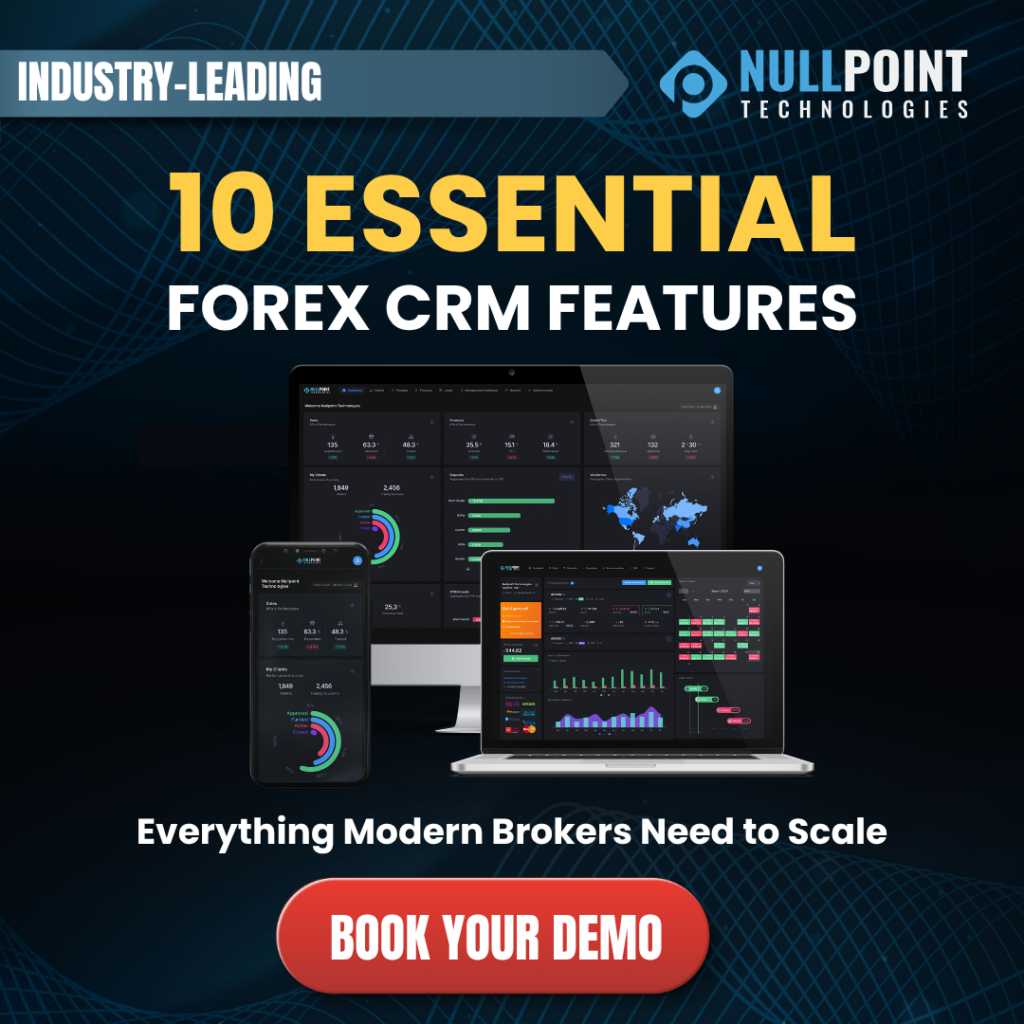
If you’re evaluating solutions, here are the 10 essential features every Forex CRM should include in 2026.
1. Complete Client Management
At its core, a Forex CRM should provide a centralized view of every client.
This includes:
- Personal information
- Trading accounts
- Wallet balances
- Verification status
- Communication history
- Financial activity
Having a complete client profile enables sales, compliance, finance, and support teams to work from the same source of truth.
2. Trader’s Room (Client Area)
The Trader’s Room is where traders interact with your brokerage every day.
A modern Client Area should allow users to:
- Register online
- Open trading accounts
- Complete KYC
- Deposit funds
- Withdraw funds
- Manage wallets
- Access reports
The easier these processes are, the better the client experience becomes.
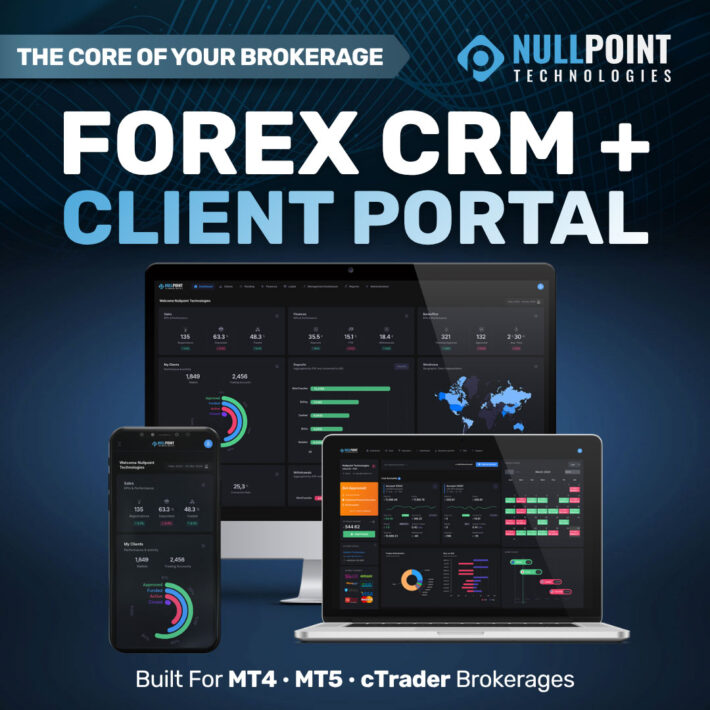
Learn more about the Nullpoint Forex CRM & Client Area:
 https://nullpoint.io/forex-crm-client-area/
3. MT4, MT5 & cTrader Integration
Your CRM should integrate directly with leading trading platforms.
Native integration with:
- MetaTrader 4
- MetaTrader 5
- cTrader
allows account creation, balance synchronization, trading information, and operational workflows to remain connected in real time.
Without seamless integration, brokerage teams spend unnecessary time switching between multiple systems.
4. Automated KYC & Compliance
Compliance is no longer optional.
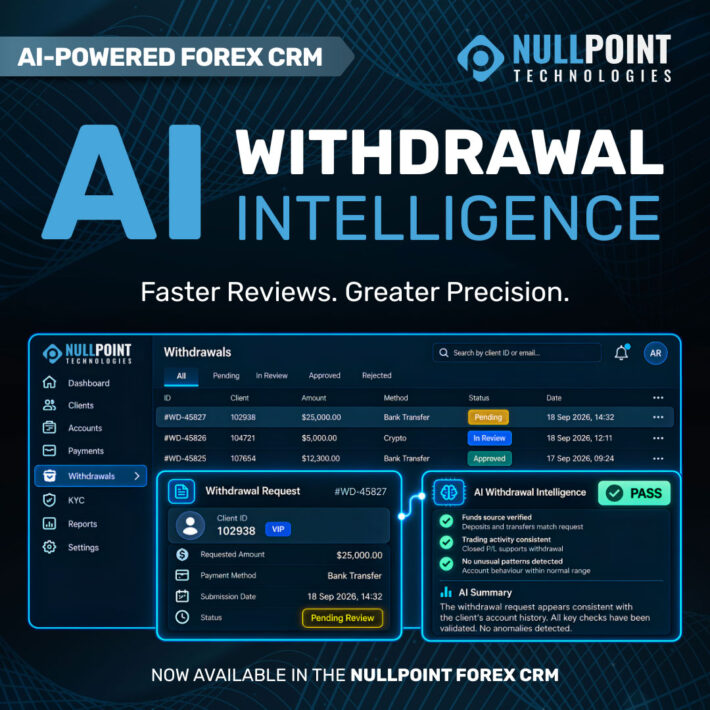
A modern Forex CRM should automate:
- Identity verification
- Document collection
- AML workflows
- Client approvals
- Compliance monitoring
Automation helps brokers onboard clients faster while reducing administrative effort.
5. Payment Gateway Integration
Funding should be simple for traders and easy to manage for operations teams.
A professional Forex CRM should integrate with:
- Credit cards
- Bank transfers
- Digital wallets
- Cryptocurrency providers
- Local payment methods
This creates a smoother funding experience while simplifying reconciliation for the brokerage.
6. Bonus Automation
Promotional campaigns are becoming an increasingly important part of client acquisition and retention.
Instead of manually managing bonus campaigns, modern brokerages are moving toward Bonus Automation.
Integrated Bonus Automation enables brokers to:
- Launch promotional campaigns
- Reward eligible traders
- Increase client engagement
- Reduce manual administration
Read more:
https://nullpoint.io/forex-crm-bonus-automation/
7. Introducing Broker (IB) Management
Many brokerages generate a significant percentage of new business through Introducing Brokers.
An effective Forex CRM should include:
- Referral tracking
- Commission management
- Multi-level partner structures
- Performance reporting
Integrated IB Management eliminates the need for external partner software.
Learn more:
https://nullpoint.io/forex-ib-partners-management-system/
8. Reporting & Analytics
Data helps brokerages make better decisions.
A modern CRM should provide dashboards covering:
- Client activity
- Deposits
- Withdrawals
- Sales performance
- Conversion rates
- Operational KPIs
Real-time reporting enables management teams to identify trends and respond quickly.
9. Workflow Automation
As brokerages grow, manual processes become a bottleneck.
Automation helps reduce repetitive tasks such as:
- Client onboarding
- Account creation
- Compliance workflows
- Internal notifications
- Promotional campaigns
- Operational approvals
The result is greater efficiency and improved scalability.
10. API & Third-Party Integrations
No brokerage operates in isolation.
Your CRM should integrate with:
- Trading platforms
- Payment providers
- KYC providers
- Marketing tools
- Business intelligence platforms
- Custom applications
An API-first approach ensures your technology stack can grow with your business.
Choosing the Right Forex CRM
Every brokerage has unique operational requirements, but the best Forex CRM platforms share one common goal: bringing every critical business process into a single, integrated ecosystem.
When evaluating providers, ask yourself:
- Can it scale as the brokerage grows?
- Does it reduce manual work?
- Does it improve the client experience?
- Does it integrate with our existing infrastructure?
- Can it support future business expansion?
A CRM should not simply manage contacts—it should become the operational foundation of your brokerage.
Why Modern Brokerages Choose Integrated Platforms
Disconnected systems create unnecessary complexity.
By combining client management, compliance, payments, Trader’s Room functionality, Bonus Automation, reporting, and IB Management into one platform, brokerages can operate more efficiently while providing a better experience for traders.
At Nullpoint Technologies, we’ve designed our Forex CRM to support every stage of the client lifecycle—from registration and onboarding to payments, promotions, reporting, and long-term client engagement.
Explore the Nullpoint Forex CRM:
https://nullpoint.io/forex-crm-client-area/
Final Thoughts
Technology continues to reshape the forex industry, and the role of the Forex CRM has evolved far beyond customer management.
Today’s brokerages need intelligent platforms that automate operations, simplify compliance, improve client engagement, and support sustainable growth.
If you’re choosing a Forex CRM in 2026, make sure it offers more than basic client management. The right platform should become the central hub of your brokerage—connecting every department, every workflow, and every client interaction in one place.